


Guangdong Takes the Lead in Mandating Full FTTR Coverage for Renovated Old Residential Communities: Stock Renovation Becomes a Lucrative New Business for System Integrators
2026-08-14 15:01:32
19
Guangdong Takes the Lead in Mandating Full FTTR Coverage for Renovated Old Residential Communities: Stock Renovation Becomes a Lucrative New Business for System Integrators
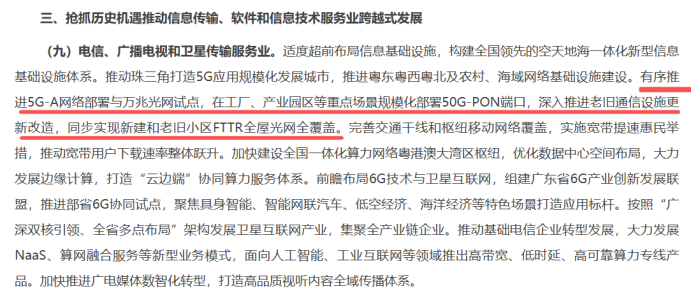
On June 19, 2026, the People’s Government of Guangdong Province issued the Implementation Plan for Expanding Capacity and Improving Quality of the Service Industry in Guangdong Province. The document clearly stipulates: “Further advance the renewal and renovation of outdated communication facilities, and roll out full coverage of FTTR (Fiber to the Room) whole-home optical networks for both newly built and old residential communities in parallel.”
This marks the first time a provincial-level government document has explicitly required comprehensive FTTR deployment in old residential compounds. With Guangdong setting this precedent, practitioners in the weak current industry can easily foresee what will unfold nationwide next.
I. Guangdong Blazes the Trail; Other Provinces Will Follow Suit Soon
The wording in Guangdong’s policy document merits in-depth analysis: “Further advance the renewal and renovation of outdated communication facilities, and roll out full coverage of FTTR whole-home optical networks for both newly built and old residential communities in parallel.” Two core phrases stand out.
“Roll out in parallel”
Traditional renovation work for old communities mainly includes wall refurbishment, pipeline replacement and pavement hardening. However, Guangdong elevates FTTR whole-home optical network deployment to an equal priority. Instead of being implemented “where conditions permit”, it must be completed simultaneously with physical renovations. This means communication infrastructure is no longer an optional add-on for old community upgrades, but a mandatory hard target to be delivered in tandem.
“Full coverage”
It is not limited to pilot projects, demonstration zones or “conditional communities” — the requirement applies universally to all newly built and aging residential compounds. Guangdong’s resolve is unambiguous: fiber-to-the-room is no longer a discretionary upgrade, but a compulsory standard.
Guangdong has long served as the national bellwether for communications infrastructure rollout. From 5G to Gigabit optical broadband, it has consistently pioneered large-scale commercial deployment across the country. This landmark FTTR full coverage mandate will likely become the benchmark for other provincial governments to emulate. Those who interpret this policy signal early will secure the first entry tickets to the massive old community communications renovation market.
II. How Large Is the Stock Renovation Market?
The market scale is substantial enough to sustain system integrators for years to come.
At the national level, an estimated 115,000 old urban residential communities will commence renovation during the 15th Five-Year Plan period, each requiring synchronous upgrades to communications infrastructure. The industry focus is shifting from new builds to stock asset retrofits.
Over the past few years, full-optical network projects were predominantly concentrated on new real estate developments and large industrial parks. Yet the volume of new housing construction is finite, while the retrofitting demand for aging residential stock represents the real market powerhouse, generating steady and continuous orders for legacy network replacement and capacity upgrading.
Guangdong has taken the first step, and nationwide replication is only a matter of time. Once this policy gains snowball momentum, integrators will gain access to a countrywide stock renovation market far beyond Guangdong’s borders.
III. How Can Integrators Capture This Business Opportunity?
With Guangdong leading the policy rollout and other provinces poised to follow, integrators only need to focus on two core priorities: correctly interpreting policy directives and selecting a reliable manufacturer partner.
AINOPOL (智慧光迅) has built a comprehensive partnership framework that directly addresses the biggest pain points troubling system integrators:
1. Alleviate Capital Pressure
Old community renovation projects feature long construction cycles and slow payment collection, with the biggest risk being working capital tied up in inventory.
AINOPOL imposes no mandatory initial stock purchase, no rigid annual sales KPIs, and strictly adopts demand-based procurement. Standard orders follow cash-on-delivery terms. Two binding clauses are written into formal contracts:
Red Line No.4: Zero forced inventory stocking
Red Line No.5: Cash payment upon goods delivery
Partners only place orders when projects are confirmed, with no procurement obligations for idle inventory.
2. Protect Profit Margins from Middleman Erosion
Direct manufacturer supply eliminates hierarchical distributors including general agents and secondary resellers.
Red Line No.3: Flat channel structure with no tiered markup guarantees the lowest possible base price, and 100% of profit margins belong exclusively to the authorized integrator.
3. Eliminate Technical Barriers
FTTR installation imposes far stricter construction specifications than conventional FTTH deployments.
Pre-sales: Manufacturer undertakes solution design and bidding document preparation
Mid-project: Manufacturer provides on-site commissioning and technical support
After-sales: Round-the-clock operation and maintenance backup
Partners only need to focus on client negotiation and contract signing, fully relieved of complex technical execution work.
4. Prevent End-Client Poaching
Old community projects often require multi-month follow-up, making integrators vulnerable to manufacturers hijacking deals mid-cycle. Two non-negotiable protective clauses are legally embedded in cooperation agreements:
Red Line No.1: Permanent ban on direct engagement with end customers
Red Line No.6: Absolute project protection
Filing a project triggers immediate exclusive protection, and the manufacturer is prohibited from intervening in your client resources.
Red Line No.8: Full allocation of all end-user leads — 100% of customer clues sourced by the manufacturer are forwarded to partners free of charge.
Guangdong has formally incorporated FTTR full coverage into provincial regulatory policies, upgrading communications retrofits for old residential communities from an optional extra to a mandatory requirement. The upgrade from FTTH (Fiber to the Home) to FTTR (Fiber to the Room) unlocks unprecedented golden opportunities for system integrators.
National rollout is inevitable. Once the nationwide stock renovation market fully opens, sustained large-scale order volumes will emerge.
For integrators, the action plan remains simple: decode policy trends and choose a trustworthy manufacturer partner.
With 115,000 aging residential communities awaiting upgrades and Guangdong setting the national template, now is the perfect timing to enter this high-growth track.
FAQ
Q: When exactly was Guangdong’s FTTR full coverage policy released?
A: On June 19, 2026, the People’s Government of Guangdong Province officially issued the Implementation Plan for Expanding Capacity and Improving Quality of the Service Industry in Guangdong Province, which clearly states: “Further advance the renewal and renovation of outdated communication facilities, and roll out full coverage of FTTR whole-home optical networks for both newly built and old residential communities in parallel.”
Q: What is the difference between FTTR and FTTH?
A: FTTH stands for Fiber to the Home: Optical fiber terminates only at the household entry box, with internal wiring relying on copper Ethernet cables.
FTTR stands for Fiber to the Room: Optical fiber is routed directly to each individual room, paired with optical APs to deliver seamless full-house Gigabit Wi-Fi coverage. FTTR demands higher construction and technical standards, which creates core business opportunities for professional system integrators.
Q: Is FTTR deployment compulsory for old community renovations?
A: The policy framework is being rolled out nationwide. Guangdong has explicitly mandated parallel full FTTR coverage. The Ministry of Industry and Information Technology and the Ministry of Housing and Urban-Rural Development jointly require synchronous communications infrastructure upgrades during old community retrofits. National People’s Congress deputies have also proposed subsidized nationwide promotion of Fiber-to-the-Room technology.
Related Articles


