AI‑Driven Restructuring of Campus Networks: Exponential Bandwidth Surge and Geometric Rise in Operational Complexity — How Do All‑Optical Networks Withstand the “AI Shockwave”?
2026-08-28 09:22:36
2
AI‑Driven Restructuring of Campus Networks: Exponential Bandwidth Surge and Geometric Rise in Operational Complexity — How Do All‑Optical Networks Withstand the “AI Shockwave”?

In the past, corporate campus networks served one primary purpose:
connecting people to the internet.
Employee PCs for office work, mobile‑phone Wi‑Fi access, and video conferencing in meeting rooms largely fulfilled operational requirements.
Once AI enters corporate campuses, networks serve far more than human users.
AI office assistants, smart conferencing, AI vision systems, digital twins, IoT devices, cloud‑hosted large‑scale models and other services continuously inject massive data traffic into networks.
A distinct shift emerges:
Previously, people waited for networks; today, AI workloads wait for networks.
As AI applications proliferate across enterprises, campus networks demand fundamental re‑evaluation.
I. AI Pushes Campus Networks Toward “High Bandwidth, High Concurrency and High Complexity”
1. Exploding data volumes render legacy bandwidth insufficient
What makes AI network‑intensive is not merely additional applications, but its transformation of data generation and transmission patterns.
Under traditional office workflows, a file is typically downloaded once.
By contrast, AI vision systems continuously upload images and video streams; digital twins constantly synchronise field data; AI conferencing generates massive real‑time audio‑video streams; enterprise calls to cloud‑based large models produce persistent uplink‑and‑downlink traffic.
Network traffic evolves from occasional traffic spikes to sustained high‑volume loads.
Uplink bandwidth, often overlooked previously, grows critically important for AI scenarios.
When numerous AI terminals operate concurrently, existing Gigabit and 10‑Gigabit access capacities gradually become bottlenecks.
Hence the primary shift brought by AI is not simply “faster networks”.
Campuses require networks capable of sustaining continuous data‑volume growth.
2. Surging connected terminals create tangled campus‑network topologies
AI also drives sharp growth in endpoint quantities.
Traditional office zones may host dozens of PCs.
Today, alongside PCs and mobile phones, deployments include cameras, AI‑enabled cameras, sensors, access‑control hardware, wireless APs, robots and diverse IoT endpoints.
More services mean more network hardware:
switches, cabinets, wiring closets, copper cables and optical modules.
Networks grow increasingly convoluted. Instead of managing one unified network, IT teams face multiple interwoven network fabrics.
Businesses grow smarter, yet networks become harder to administer.
3. AI‑driven services cannot tolerate network weak points
AI applications impose stability requirements distinctly stricter than standard office workloads.
A single failed webpage causes minimal disruption.
Yet latency, packet loss or outages during live AI‑video analytics, cloud‑model data processing or core AI‑powered enterprise operations amplify negative impacts significantly.
Accordingly, AI‑era campus networks must deliver more than high bandwidth.
They must simultaneously guarantee low latency, low packet‑loss ratios, service isolation and link reliability.
4. Operational pain point: expanding networks without corresponding staffing growth
This represents another hidden pressure AI places on campus networks.
Hardware multiplies and services grow more sophisticated, yet enterprise IT teams rarely scale headcount proportionally.
Fault‑diagnosis challenges intensify:
Is the root cause endpoint‑side failure? Link degradation? Switch malfunction? Or bandwidth saturation driven by certain service flows?
Manual device‑by‑device inspection becomes increasingly burdensome as network scale expands.
II. AINOPOL Redefines the Underlying Logic for Campus Networks Against AI‑Driven Pressures
AI increases network complexity, yet solutions need not rely on endlessly stacking hardware.
AINOPOL’s enterprise‑campus all‑optical solution targets foundational network‑architecture redesign:
Fibre serves as the unified transmission foundation; PON architecture reduces intermediate active hardware; ONUs and endpoint‑access capabilities are configured according to individual service requirements.
Rather than continuously bolting components onto legacy networks for AI workloads, the solution rebuilds the underlying network foundation first.
1. Escalating bandwidth demands: build‑in capacity for seamless future upgrades
AINOPOL adopts the OLT + fibre + ONU all‑optical architecture, extending fibre throughout campus zones down to endpoints.
Compared with conventional multi‑tier switching frameworks, all‑optical deployments eliminate large numbers of intermediate active nodes for flatter network topologies.
Crucially, fibre offers substantial headroom for bandwidth evolution.
Enterprises may deploy GPON, XGS‑PON and other standards matching present‑day business demands, then migrate toward higher‑rate 50G‑PON for future AI, high‑definition video and cloud‑computing growth.
AINOPOL solutions support smooth upgrades to 50G/200G PON. Fibre infrastructure is deployed once, with bandwidth increased incrementally as services expand.
This avoids a common misconception:
AI adoption does not require immediate full‑campus deployment of top‑tier network hardware.
The essential requirement is ensuring today’s network does not constrain tomorrow’s development.
2. Growing terminal density: extend fibre toward the “last metre”
Fibre deployment limited solely to equipment rooms cannot complete AI‑era network modernisation.
Real‑world data originates at endpoints.
AINOPOL leverages industrial‑grade ONUs, Wi‑Fi 6 APs and optical‑electrical converged solutions to extend networks to office endpoints, IoT hardware and security‑monitoring devices.
POF optical‑electrical composite cables integrate optical‑fibre communication and power delivery within one cable, lowering deployment complexity compared with separate data and power cabling. This technology supports long‑distance repeater‑free coverage for IoT and security endpoints.
For future AI‑dense campuses, this approach delivers key value:
Networks must reach buildings and rooms, and get as close as practicable to data‑generating devices.
3. Prevent AI‑service queuing: prioritise critical workloads
Traffic within AI‑enabled campuses cannot receive equal‑priority treatment.
For instance, simultaneous regular web browsing and AI‑video analytics must not compete for network resources under identical rules.
AINOPOL implements service‑priority scheduling and DBA dynamic bandwidth allocation to guarantee resource provisioning for high‑priority workloads.
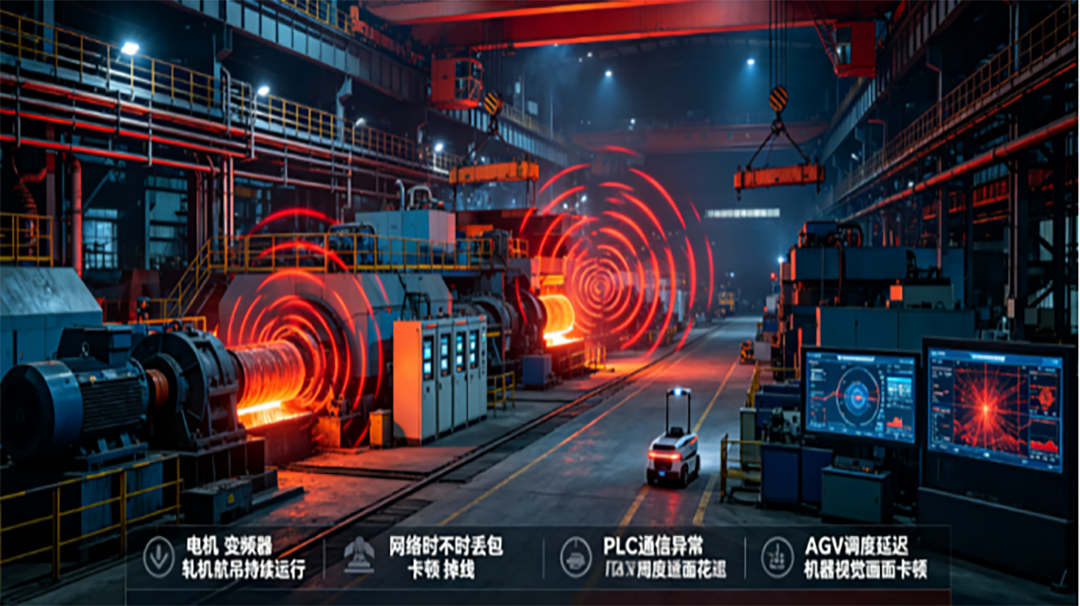
For industrial scenarios, specifications achieve latency below 15 ms and packet‑loss rates under 0.01 %, supporting real‑time AGV dispatching.
Identical logic applies to AI‑oriented campuses:
business‑critical applications receive preferential network resources, with bandwidth allocated based on business value.
4. Larger‑scale networks must not increase operational overhead
Built atop the all‑optical framework, AINOPOL integrates the EaaS cloud‑platform for network monitoring and proactive alerting.
Solutions provide 7×24‑hour technical support combining remote and on‑site maintenance.
Campus‑network operations shift from the reactive model:
“Detect and resolve faults after occurrence”
towards a proactive workflow:
“Detect anomalies → trigger proactive alerts → rapid localisation → timely remediation”.
This capability proves vital for campuses adopting expanding AI workloads.
Future IT‑team fatigue will stem less from isolated hardware failures than from sheer volume of devices, services and links.
Simplified architecture and unified management therefore grow indispensable.
AI will continue evolving. Enterprises currently deploy AI for meeting‑minute generation, knowledge retrieval and smart office workflows. Tomorrow will bring AI vision, digital twins and intelligent inspection. Further ahead, AI Agents, edge computing and real‑time inference will enter campus environments. No one can precisely predict bandwidth requirements several years hence.
Consequently, a more critical question than “how many Gigabits should we deploy today?” becomes:
Can our network grow alongside AI?
This explains rising industry interest in all‑optical campus networks.
Fibre delivers long‑term bandwidth‑evolution potential. PON architecture reduces network hierarchy and active‑device counts. ONUs enable flexible multi‑endpoint access. Combined with service isolation, bandwidth scheduling and proactive operations, all‑optical networks eliminate the need for wholesale rebuilds following every AI‑application upgrade.
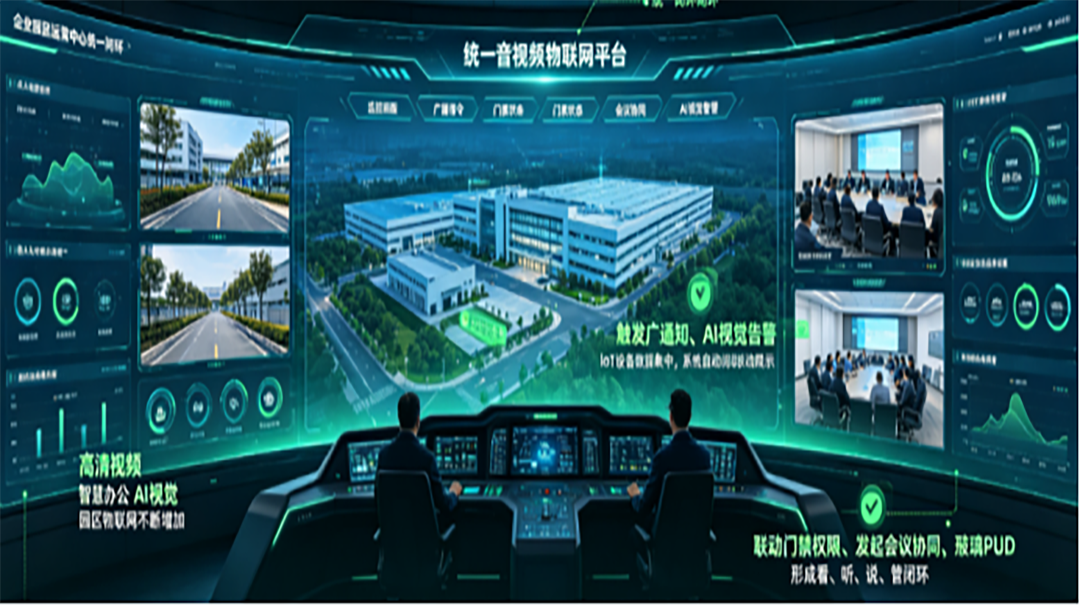
AINOPOL’s enterprise‑campus all‑optical solution builds next‑generation campus‑communication infrastructure founded on all‑optical multi‑service bearing, audio‑video convergence, security protection and full‑lifecycle services.
As AI penetrates deeper into corporate campuses, computing power and applications may iterate continuously, yet the underlying network foundation should remain as stable as possible.
AI drives constant business transformation, while all‑optical networks reliably underpin such changes.
This represents a highly viable upgrade path for campus networks responding to the next wave of AI innovation.
FAQ
Q: What are the greatest AI‑driven challenges facing campus networks?
A: Three simultaneous pressures: exponentially rising bandwidth consumption, dissolving network perimeters, and geometric growth in operational complexity. Legacy network architectures can no longer keep pace.
Q: What differentiates 50G‑PON from conventional Gigabit networks?
A: 50G‑PON delivers 50‑fold greater bandwidth than traditional Gigabit networks. A single PON port supplies 50 Gbps with end‑to‑end latency under 1 ms. Whereas Gigabit links struggle with one 4K stream, 50G‑PON supports concurrent transmission for hundreds of AI cameras.
Q: Will future technical upgrades require full redeployment if we implement all‑optical networks now?
A: No. 50G‑PON has validated multi‑mode coexistence alongside XGS‑PON and GPON. Existing fibre and splitters are retained without recabling. Bandwidth upgrades require only equipment replacement within equipment rooms, leaving ODN cabling untouched. One‑time deployment supports bandwidth evolution across the next decade.
Related Articles